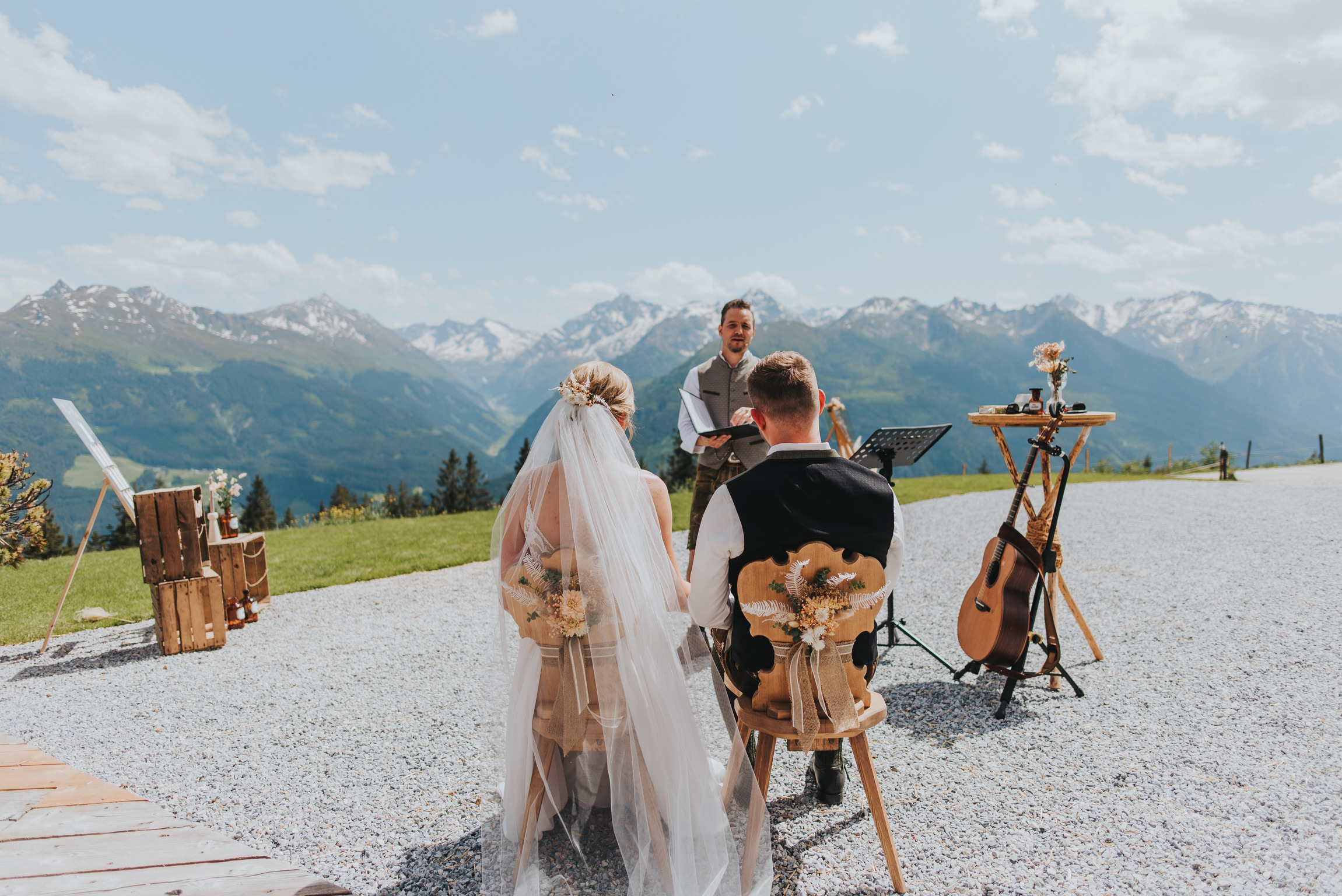
When selecting Wedding songs for the ceremony It's not just about which song is currently popular. From our perspective as wedding musicians, the fitting moment, the right interpretation, and your personal connection to the song are what matter most.
In this post, we'll show you which songs are frequently requested, which languages are particularly in demand, and why a song can have a completely different effect depending on its arrangement for the entrance, 'I do', or recessional.
The most popular wedding songs for your ceremony
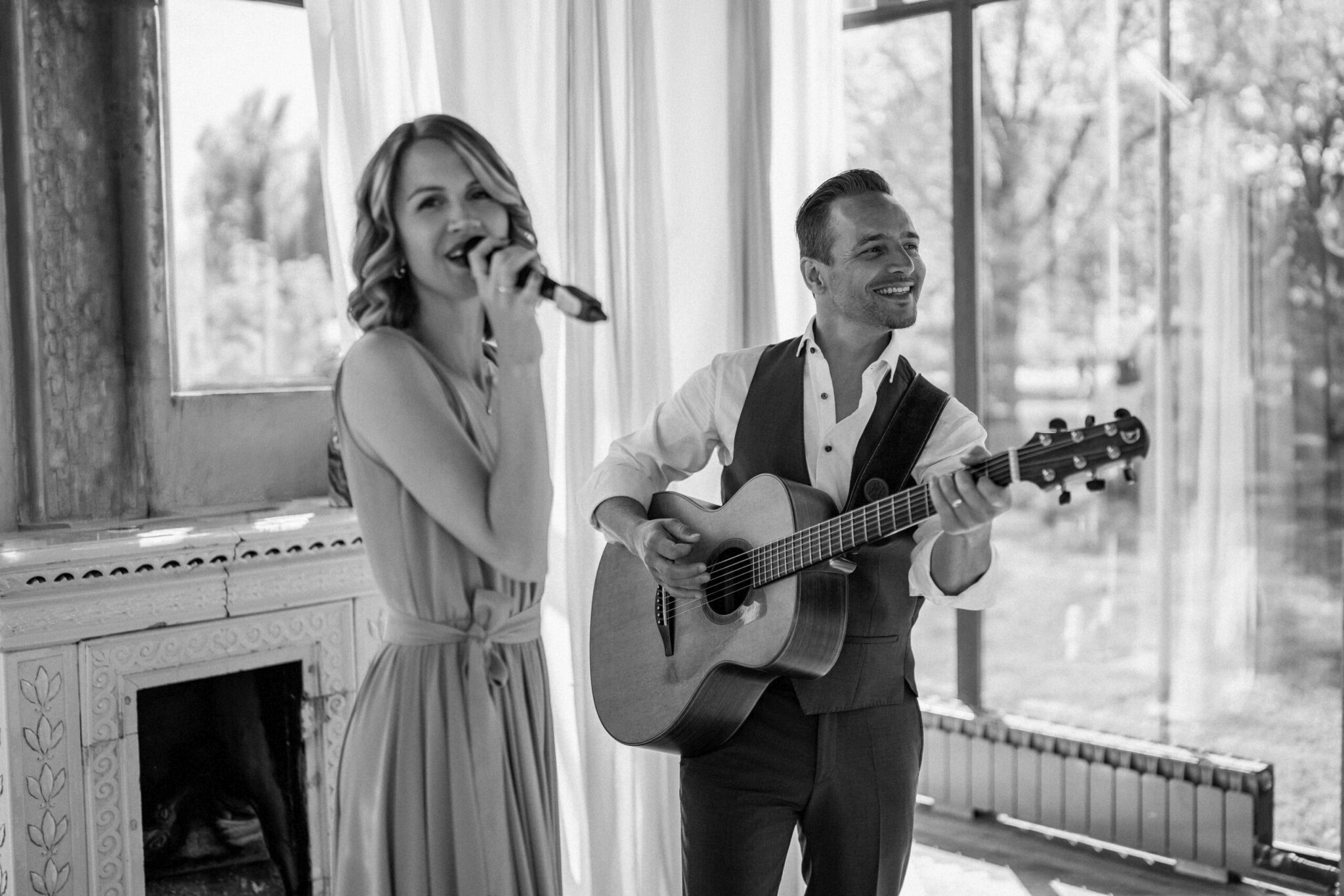
As Musical duo accompany us every year numerous weddings and experience how diverse the selection of wedding music can be. Which wedding songs are particularly frequently requested depends on the Preferences of the bridal couple, to whom Alter the guests, current trends and the musical inspirations that couples discover in their search. Some come to us with a very specific favourite song already in mind, while others find through our Audio examples first the song that perfectly accompanies their moment.
International Favourite Songs
With international songs, there are some titles that are requested particularly often.
Among the favourites are
- „Perfect“ by Ed Sheeran
- „A Sky Full of Stars“ and „Yellow“ by Coldplay
- „Hold My Hand“ and „Shallow“ by Lady Gaga
- „Can't Help Falling in Love“ by Elvis Presley
- „Love Story“ by Taylor Swift
- „A Thousand Years“ by Christina Perri
- „I’m Yours“ by Jason Mraz
These songs are so popular because they resonate with many couples familiar and at the same time leave room for personal interpretations. For us, as Live musicians for weddings That's crucial. A well-known song doesn't automatically have the desired effect if it doesn't suit the couple and the ceremony.
German-language classics and modern hits
Alongside English classics and pop ballads, German-language songs are also performed for weddings. regularly requested. This includes modern songs like „Wenn du mich lässt“ by Lea or „Ein Teil von meinem Herzen“ by Jonathan Zelter, as well as regional favourite songs like „Weilst a Herz hast wie a Bergwerk“ by Reinhard Fendrich.
Some pieces are frequently requested because we actively feature them in our repertoire and couples specifically want that version. fall in love. We see this, for example, in „Flashlight“ by Jessie J, „Ham kummst“ by Seiler und Speer, or with the Bavarian interpretation of „Ein Teil von meinem Herzen“ (A Part of My Heart), which is often recommended by couples.
German-language songs in particular have the advantage that their message is direct is understandable. However, in our work as wedding musicians, we notice that it's often not just the lyrics that are important. Frequently, it's memories that are attached to a song. Perhaps you heard it when you first met or on a holiday together. Then a well-known song becomes a personal soundtrack.
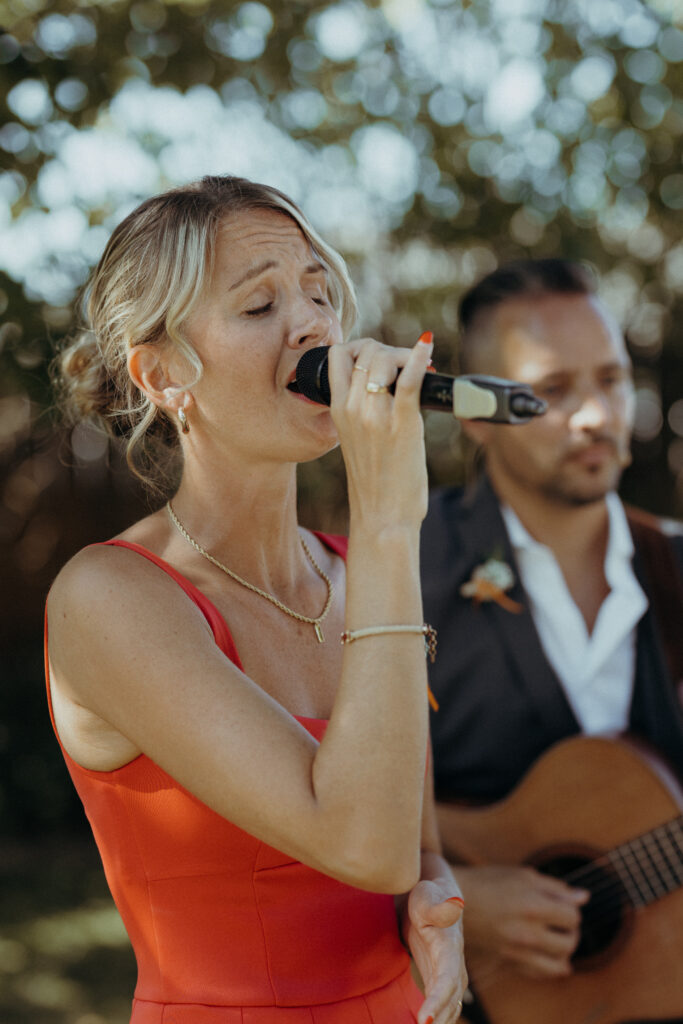
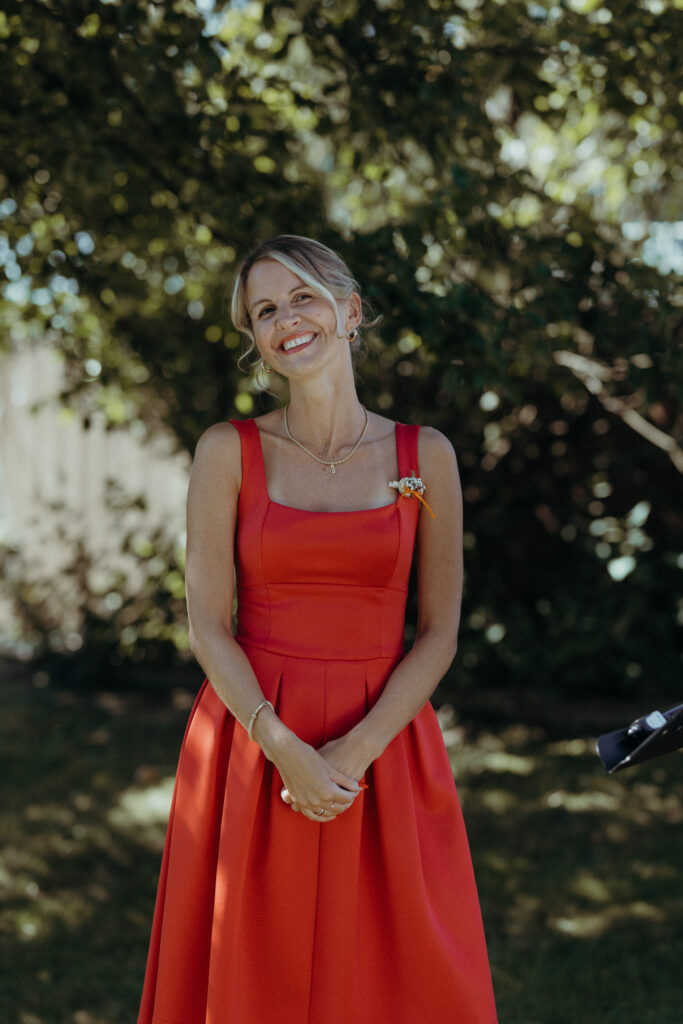
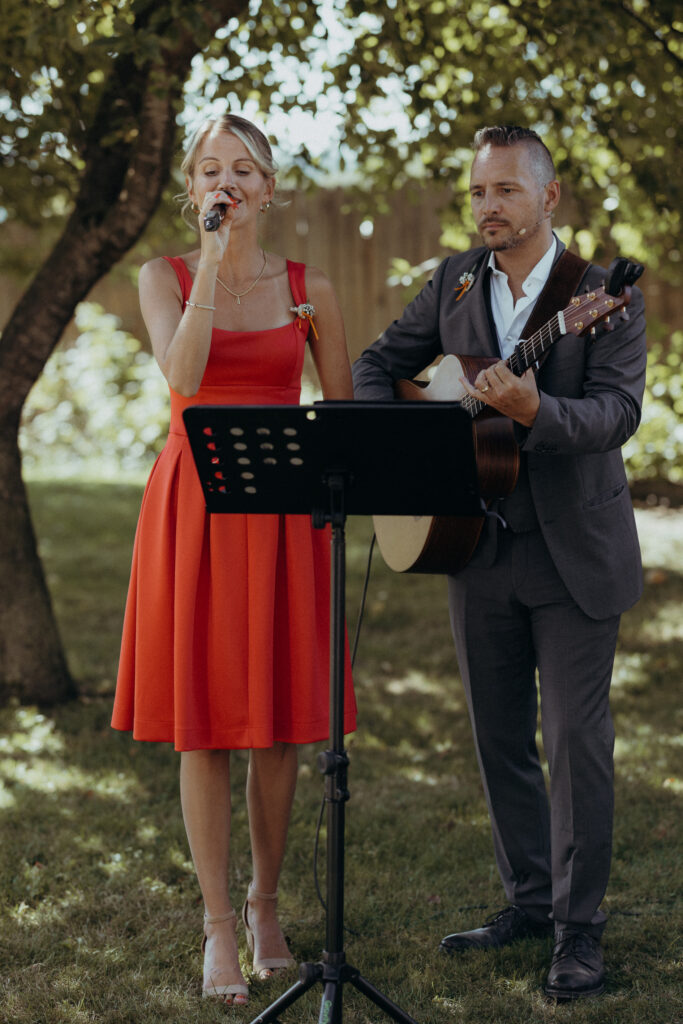
Which languages are particularly in demand for wedding songs
When asked about language, a clear picture has emerged over the years. Most frequently, Songs in German and English desired. Both languages are common in wedding music and offer a wide selection of emotional ballads, modern pop songs, and classics. In addition, there are also occasional requests for Italian songs, while Swiss German or other language areas occur significantly less frequently. Ultimately, however, it usually depends, what the newly-weds identify with.
German and English as favourites
German and English are in high demand because many couples grew up with these languages and immediately felt a connection to them Songs restore. English often sounds broad and modern, while German is often perceived as direct and approachable. However, for the impact of a song, language is not the decisive factor for us. The interpretation, voice, accompaniment and arrangement shape the moment more strongly. An English song can be moving, even if not every word is consciously is being pursued. Conversely, a German song can fall flat if the musical production isn't right.
Therefore, when it comes to wedding music, we first look at the desired mood. Should it be warm, light, solemn or intimate? Only then can we find out which language and which song would best suit it.
Warum Mundartlieder immer beliebter werden
Folk songs are pleasingly increasingly popular at weddings Asked, especially in Bavarian or Austrian dialect. Many couples find such titles more personal and less interchangeable. A dialect song often sounds as if it were written specifically for the couple. This makes it special in a humanist ceremony stark.
We often find dialect songs to be verbally familiar. However, the same applies to every wedding for us: regardless of whether it's dialect, High German, English or Italian, we treat every song with the same Carefulness. Because it’s not just the language that determines the effect, but the Credibility and subtlety with which the wedding music captures the couple's moment.
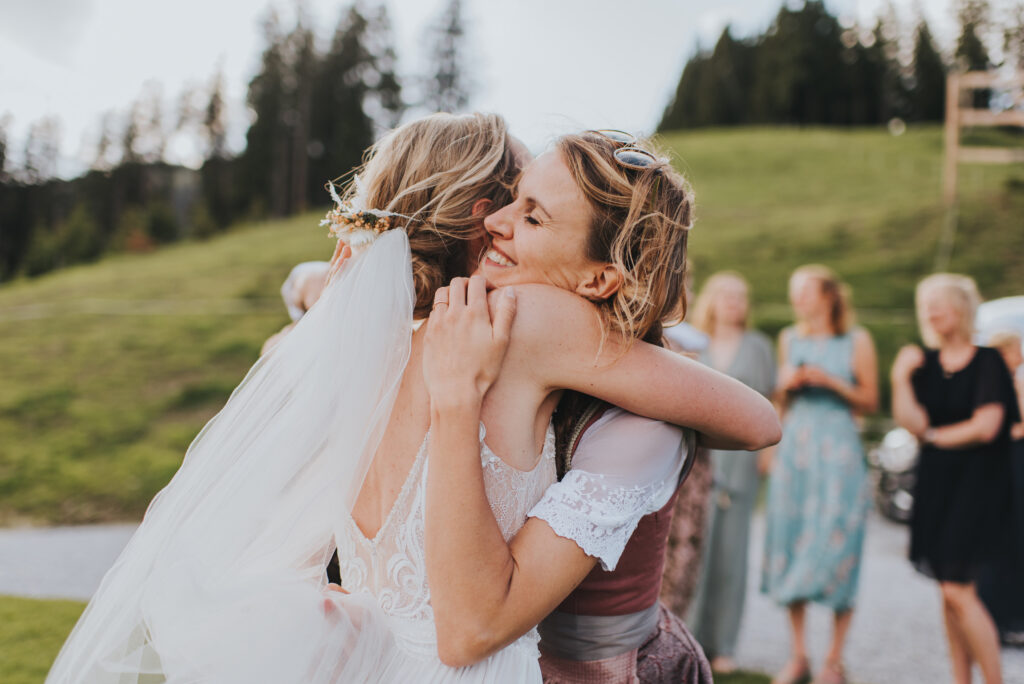
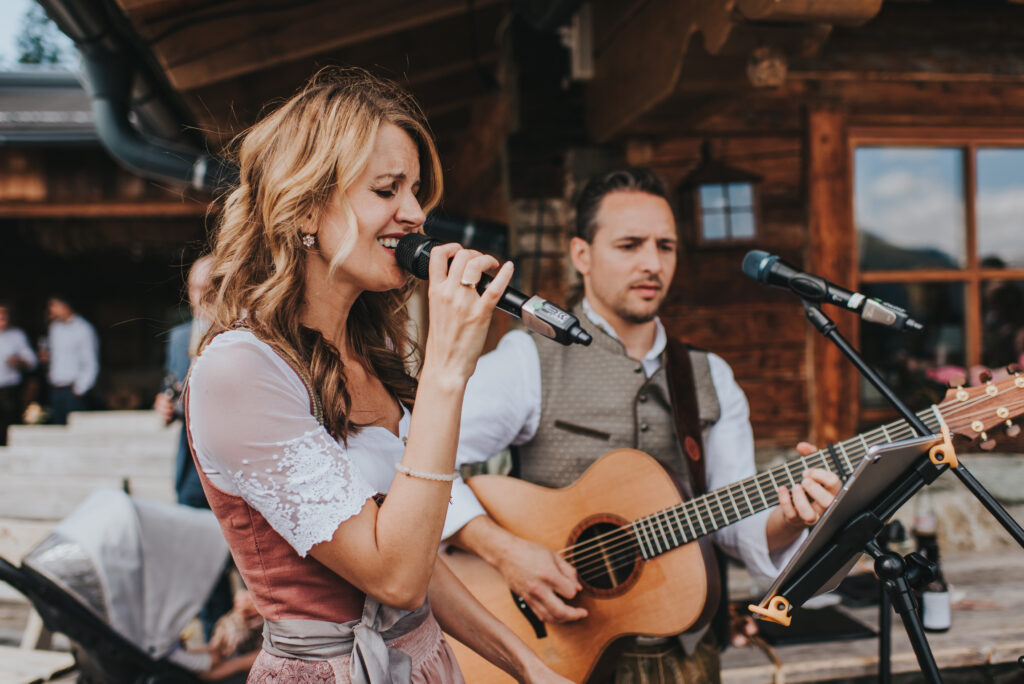
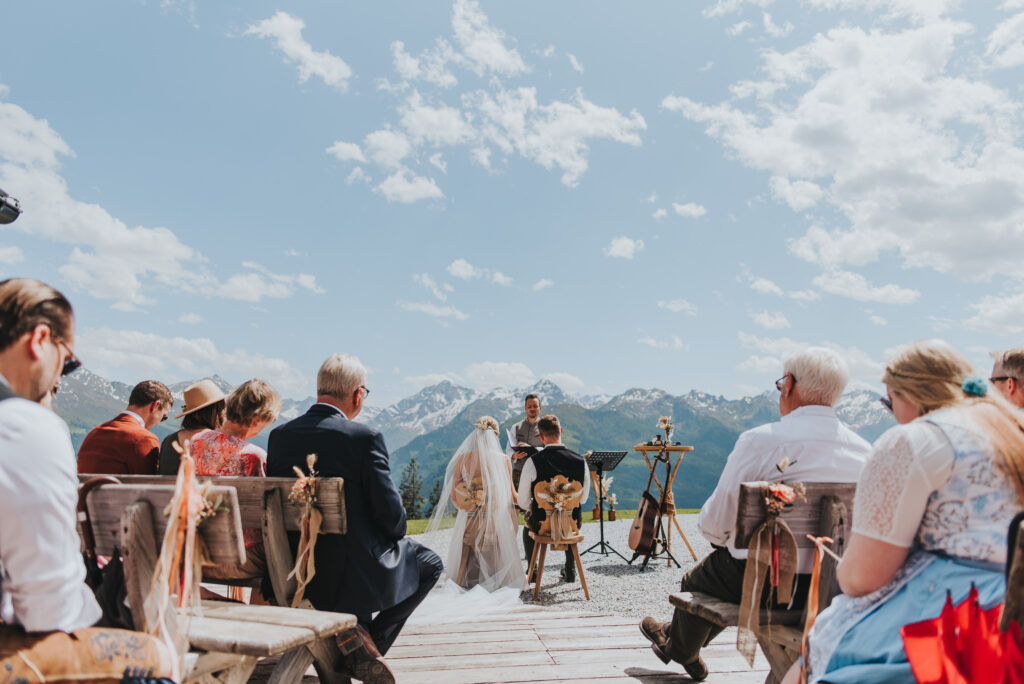
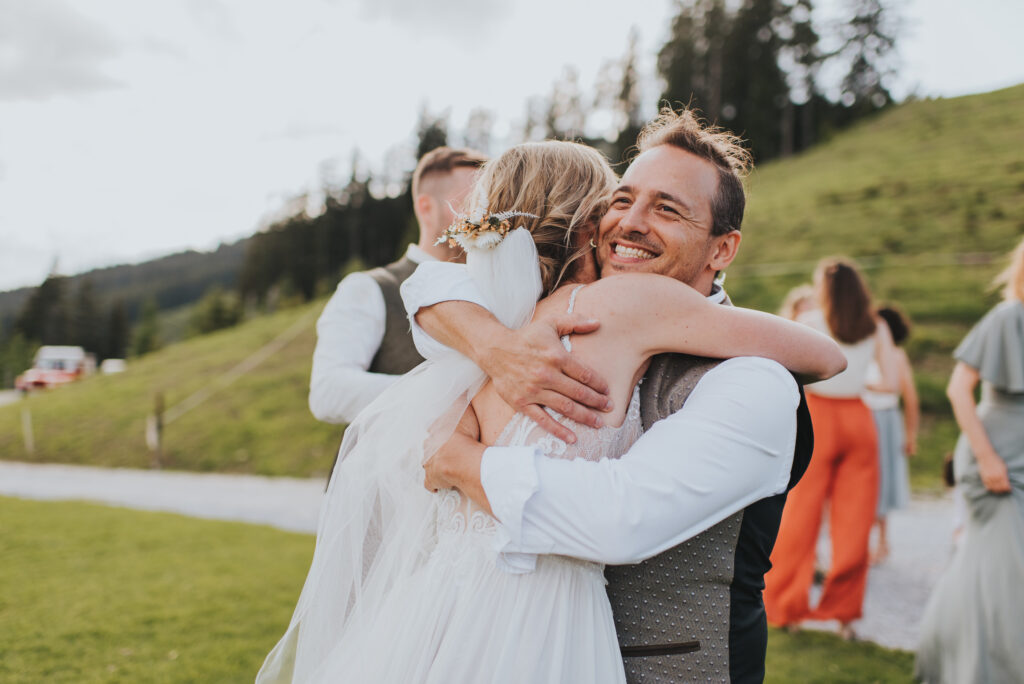
How a wedding song can have a different effect depending on the moment of the ceremony
The move-in
Upon moving in, people often Calm and soulful wedding songs chosen. The music should accompany the moment and create a suitable atmosphere. Particularly in demand are Ballads and Love songs, which have personal meaning for the bride and groom.
Which songs are suitable for this depends less on current trends and more on the desired mood. Many couples opt for a song that appears understated and puts the focus on the entrance itself.
The "I do"
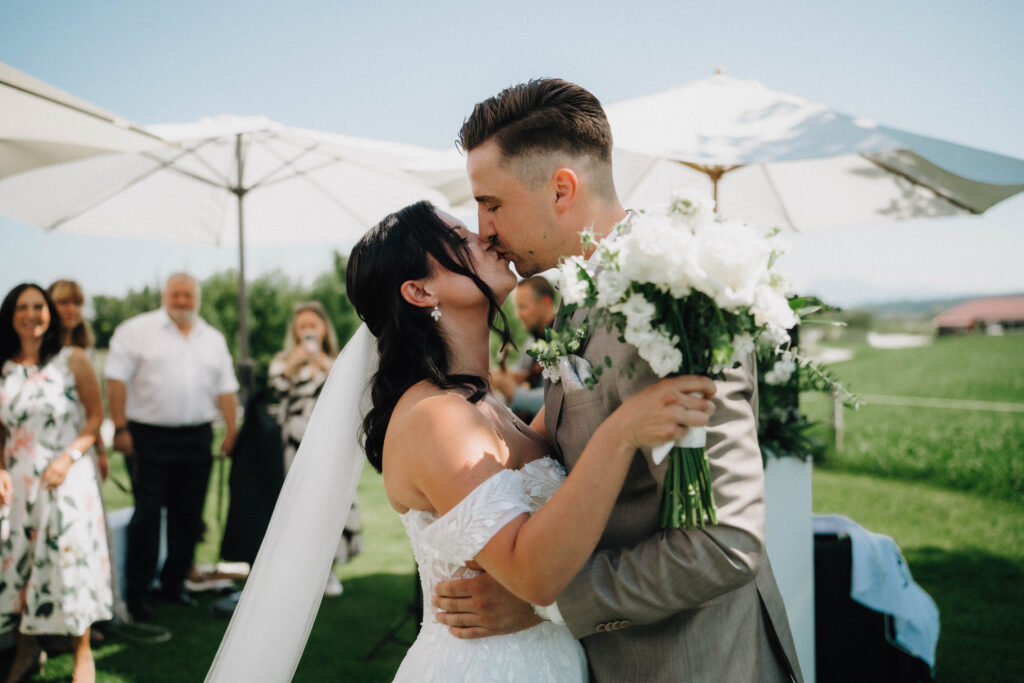
After saying "I do," the music can take on a different role. At this moment, the two celebrate themselves as a newly married couple and the atmosphere often becomes solemn.
The same song that was played during the entrance can even be used here. However, with a different interpretation, the song sounds completely different and fits the altered mood of this moment.
The extract
When leaving, we often observe couples initially looking for a particularly emotional song. However, music actually has a completely different function at this moment. The ceremony is over, the "I do" has been spoken, and the Tension is slowly easing.
Therefore, the excerpt can safely be Solemnest moment their whole ceremony. Instead of relying on tears and goosebumps, the music can now convey joy and anticipation for what's next. This is how the Transition from the emotional ceremony to the celebration much more natural and the guests are slowly brought into the party atmosphere.
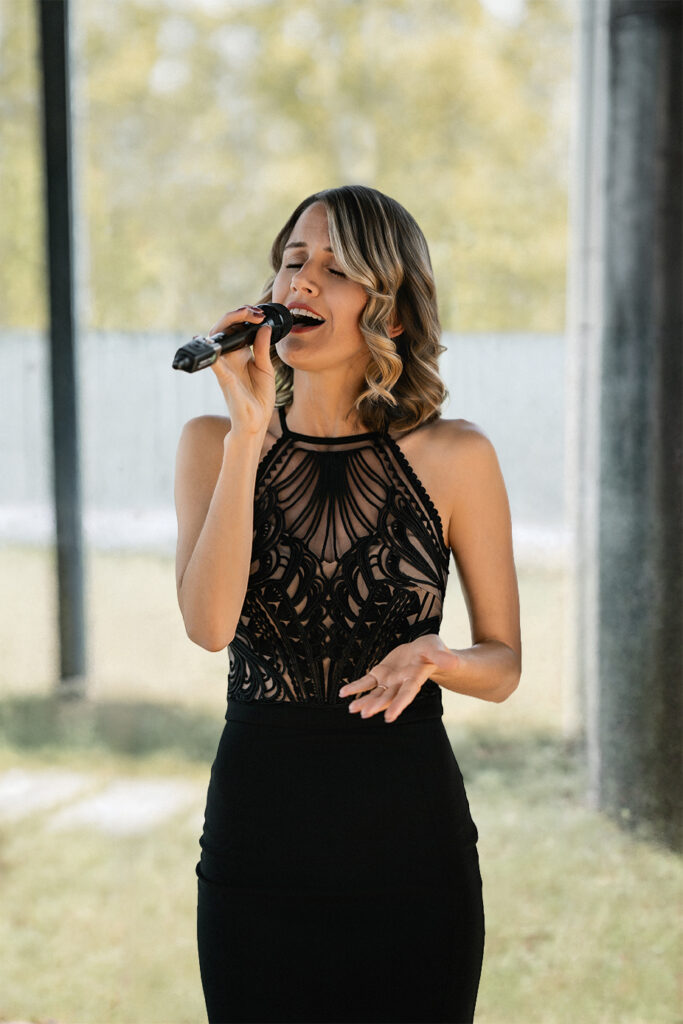
Why the interpretation of wedding songs is often more important than the song selection
Tempo, key and mood
As Wedding musicians We often tell couples that choosing the song is only part of the impact. Just as important is the Question, at what pace, in which key and with which expression a song is played. A song can sound slower and thereby more intimate. It can come to life faster and bring more lightness. Higher notes radiate, while deeper interpretations can sound warmer and more mature.
These adjustments are crucial, As many titles that appear simple at first glance gain new depth through a changed key or a suitable arrangement. Even the most beautiful favourite song is of little use if it's sung in an unfavourable key. Our task as wedding musicians is therefore not to push personal preferences to the forefront, but to shape the song so that it perfectly suits the couple at that particular moment.
The art of capturing the right moment
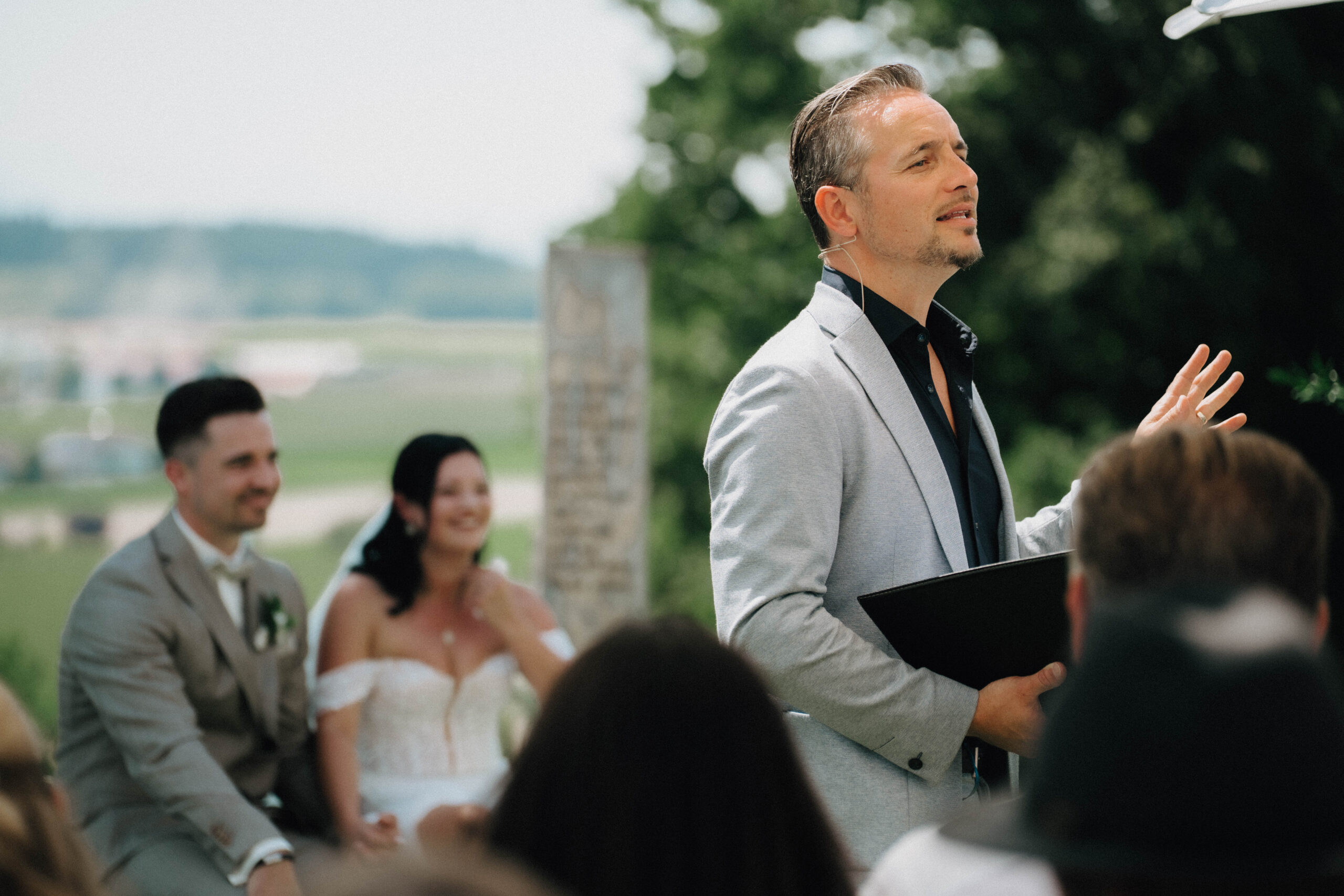
Especially at free wedding ceremonies, it's not just the music itself that plays a role, but also the Interaction between the wedding celebrant and music. When both are well-matched, they create flowing Transitions between the individual programme items. The music starts precisely where it's needed, accompanying the important moments without interrupting or overshadowing them.
From our experience, that's often what makes a big difference. When Funeral speeches and music from a single source comes, the entire ceremony feels more cohesive and the individual elements flow naturally into one another. The same applies to the entire planning of the wedding ceremony. A experienced Wedding planner ensure that the process, service provider, and schedule are perfectly coordinated.
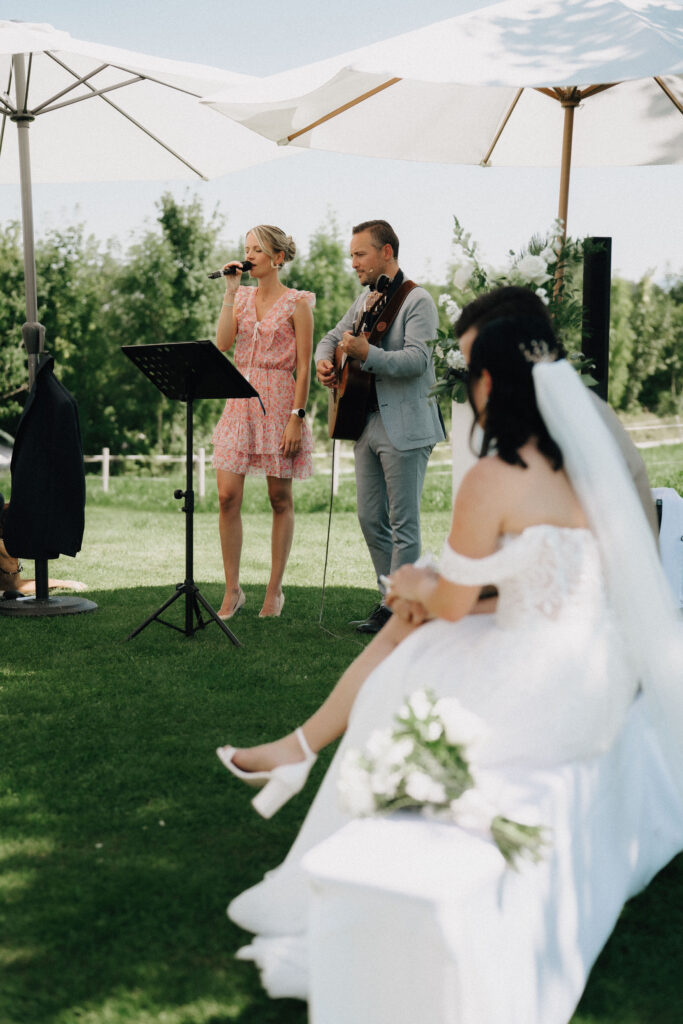
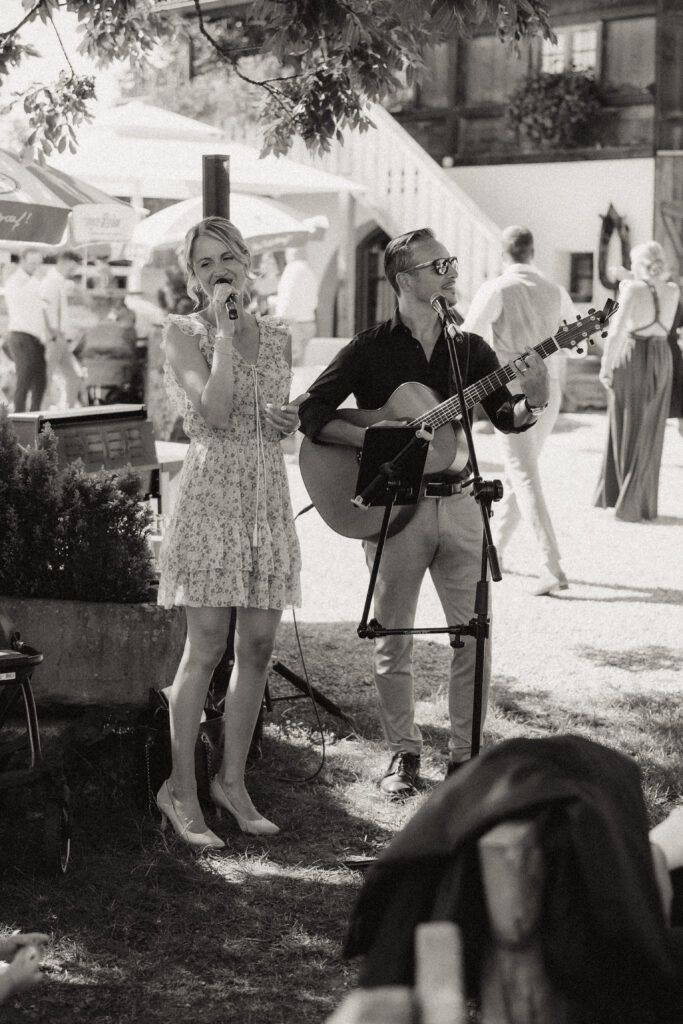
If you're currently wondering what music is suitable for your wedding ceremony, how many songs are sensible, or how music and the wedding speech can harmoniously work together, feel free to get to know us in a Free, no-obligation consultation get to know. Together we will discuss your ideas and show you how a wedding ceremony can be designed where music and words flow together naturally and every moment gets the space it deserves.
Frequently Asked Questions about Wedding Songs
How do I choose the right song for the processional?
Quiet and soulful songs are generally suitable for the procession, as they support the atmosphere of this special moment. If there's a song that connects you as a couple, that's often the best choice. You don't need to worry too much about whether the song fits the procession perfectly in its original version. The way a song is interpreted can be used to adapt its effect. For example, tempo, dynamics, and musical arrangement can all help a song accompany the procession harmoniously and create exactly the atmosphere you desire for this moment.
How important is the choice of language for the impact of the song?
Language plays a role, but it's not decisive. The impact of a song is much more influenced by the Interpretation determines through individual words. An English song can touch deeply, even if not every guest understands every line. Likewise, a dialect song can create closeness because it sounds familiar and honest.
German and English dominate wedding music. Dialects like Bavarian or Austrian are often individually perceived and remain in the guests' memories for a long time. Ultimately, the emotional impact depends not only on the language but also on how we perform a song. A lower key can make a song more grounded and emotional, while a higher one creates lighter tones. Musical nuances, pauses, and intensity also shape the mood much more strongly than many realise.
When should I choose the wedding music?
As soon as possible, without you to put pressure on. For most couples, it is ideal to finalise the wedding songs a few months before the wedding. This leaves enough time to meaningfully coordinate the entrance, vows, and exit, and to make any necessary changes.
How many songs do we need for a wedding ceremony?
The number of songs that make sense depends on the order of your ceremony. Often, three to five wedding songs scheduled: one for the entrance, one or two at selected points during the ceremony, and one for the exit. In some cases, subtle background music can also enhance individual moments or speeches.
From our perspective, the number of songs is less important than their placement. Each song should accompany a specific moment and be consciously chosen. A wedding often feels more harmonious when a few songs are used purposefully, rather than trying to fit in as many musical pieces as possible.
Roughly how much does professional live music for humanist weddings cost?
The cost for professional live music can vary depending on the ensemble, experience, travel distance, and scope of services. For musical accompaniment at a humanist wedding ceremony, prices typically range between €700 and €2,000.
However, price should not be the sole deciding factor. In addition to musical quality, experience, reliability, and the ability to react flexibly to unforeseen situations also play an important role. Music, especially at a wedding ceremony, contributes significantly to the atmosphere and should therefore be in experienced hands.
Conclusion: The perfect musical accompaniment for your wedding ceremony
The ideal musical accompaniment doesn't arise solely from well-known artists or a specific language. It arises when song, moment and Coming together for interpretation. As a duo, we repeatedly experience that the same piece of music can have a different effect depending on the occasion. Gentle for the entrance, grand and touching after the "I do", light and joyful for the exit.
Whether international classics, modern pop songs, regional dialect songs or personal favourites, Good wedding music supports the moment. That's precisely our aim as wedding musicians and wedding singers. We don't just want to play music; we want to accompany your story in a way that, for you, authentic and unforgettable remains.