Couples invest heavily in decoration and venue, but only plan the music for their humanist ceremony late on or separately from the ceremony itself. Especially with a Civil ceremony with live music however, the interplay of Speech and music whether the ceremony appears coherent or like a sequence of individual programme items.
In this post, we'll show you why music isn't just a decorative accessory, how professional musicians work, what you should look out for when choosing, and why Joint preparation instead of separate planning makes the crucial difference.
Why live music at humanist ceremonies is more than just background accompaniment
A civil ceremony with live music – the difference between head and heart
If we're being honest, we don't remember the exact words of a wedding ceremony later on. We remember, how we felt. And precisely here lies the difference: words reach us in our minds, they explain things to us, they categorise feelings. Music, by contrast, goes straight to the heart. It needs no explanation, it has an immediate effect.
The speech tells your story, gives meaning to the moment. The live music opens the emotional space for it. When both come together, something whole is created. If the music is missing, the ceremony often remains strangely cool, even when the words are beautiful.
What happens if you forgo live music
Many couples underestimate what happens if they completely forgo music or only have it on in the background. The guests listen, perhaps nod in agreement, but they will not really emotionally connected.
It is precisely in the most important moments, at the entrance, during the 'I do's', during the first kiss as a married couple, that more than just silence or spoken words is needed. Music gives these moments weight., makes them grow larger.
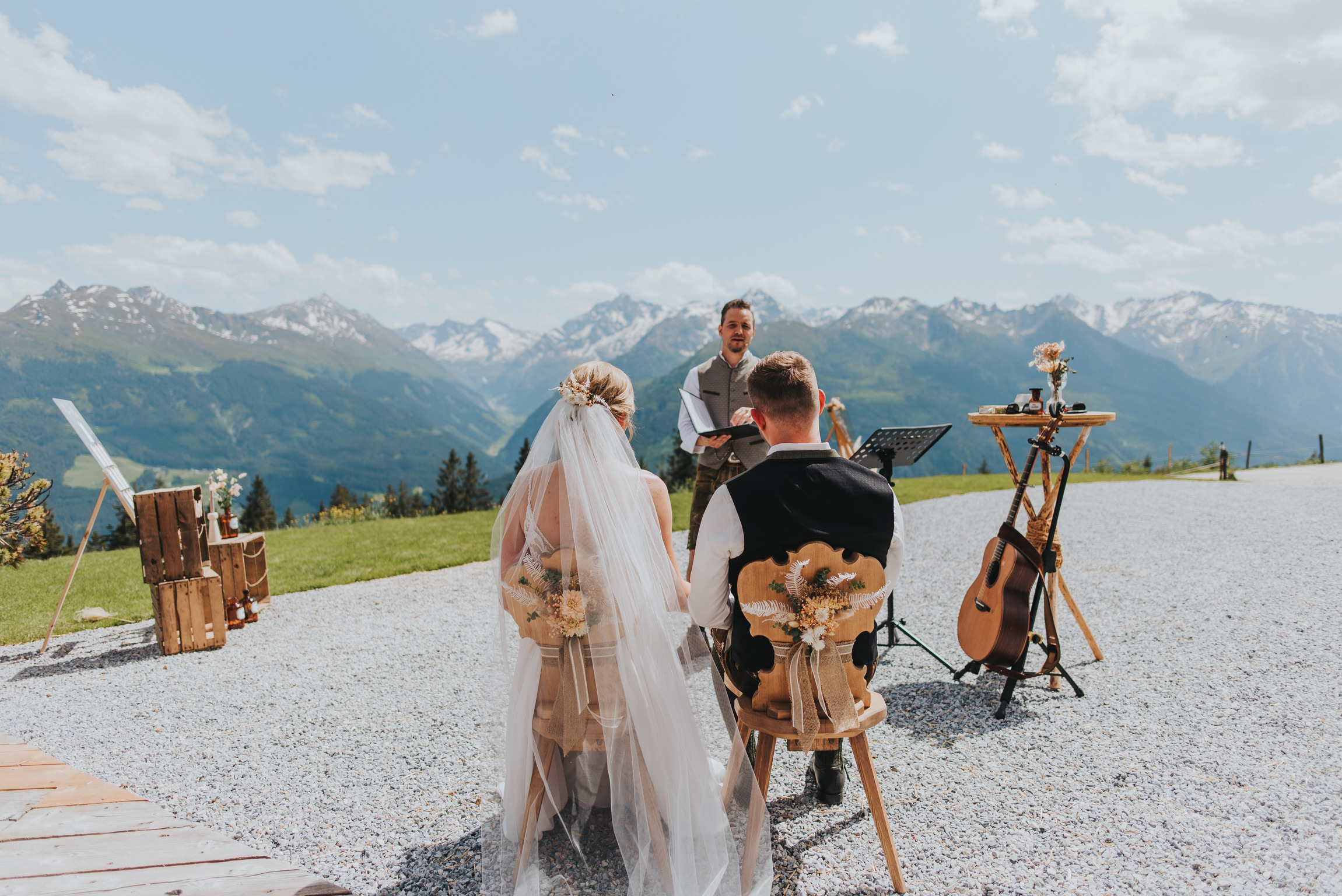
One Professional live music a free wedding ceremony makes exactly that possible: It amplifies what is already there and makes it tangible. It is not a nice addition, but a central design element.
Why playback and inexperienced musicians weaken the ceremony
Naturally, live music isn't automatically good just because it's live. The difference lies in the quality and attitude of the musician. Playback from tape always sounds the same, No matter what's happening at that moment. It doesn't react to the moment, it doesn't adapt. It just plays out. And that's exactly what the guests feel. The music feels like a backdrop, not like a part of the ceremony.
It becomes even more problematic when inexperienced musicians perform while acting as if they are on a stage. They play for themselves, wanting to impress, to show what they can do. But at a wedding ceremony, it's not about being the centre of attention. The task of a good musician is to, to hold back and enhance the moment, not themselves. Anyone who doesn't understand that is deflecting.
An experienced wedding musician observes, senses when a song should start, how loud it can be, how it needs to be played. They adapt rather than just playing through a programme. And it is precisely this Flexibility makes the difference between a nice and a truly moving wedding ceremony..
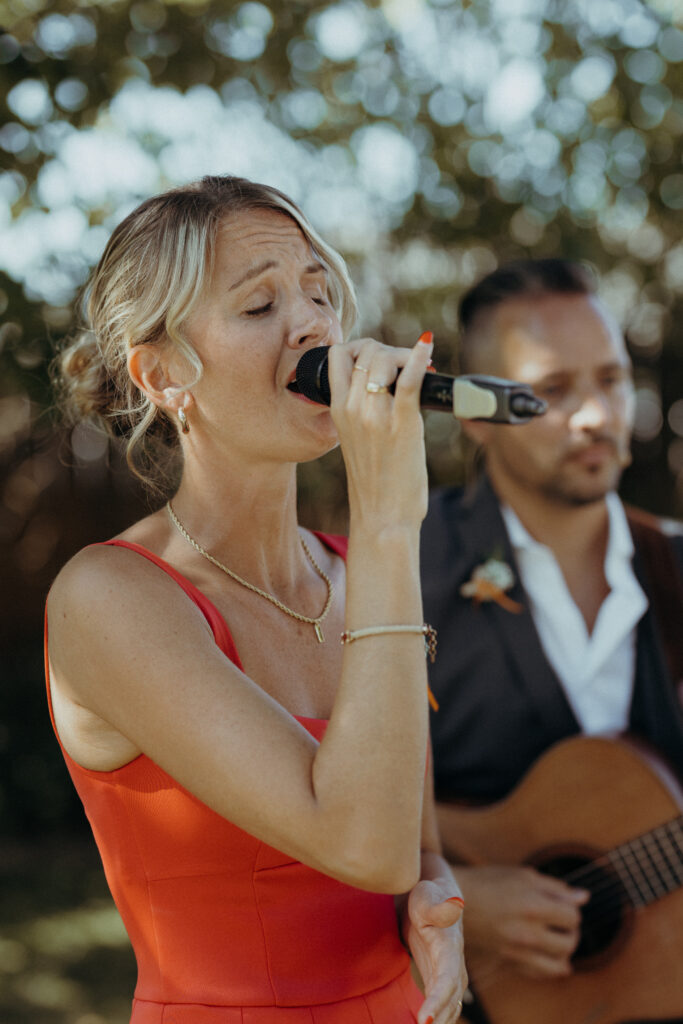
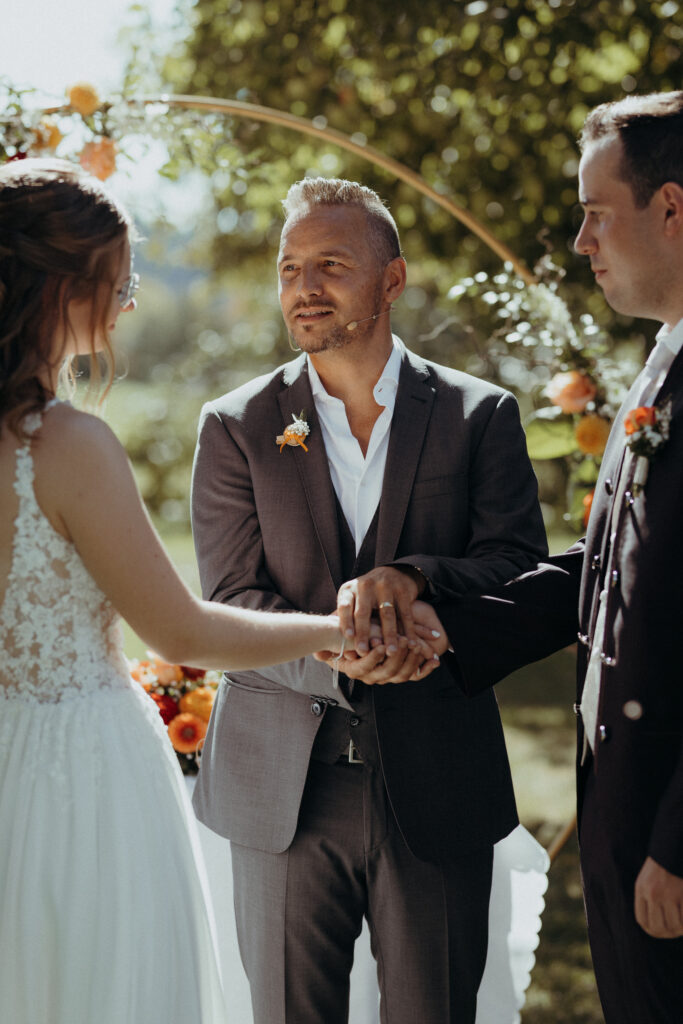
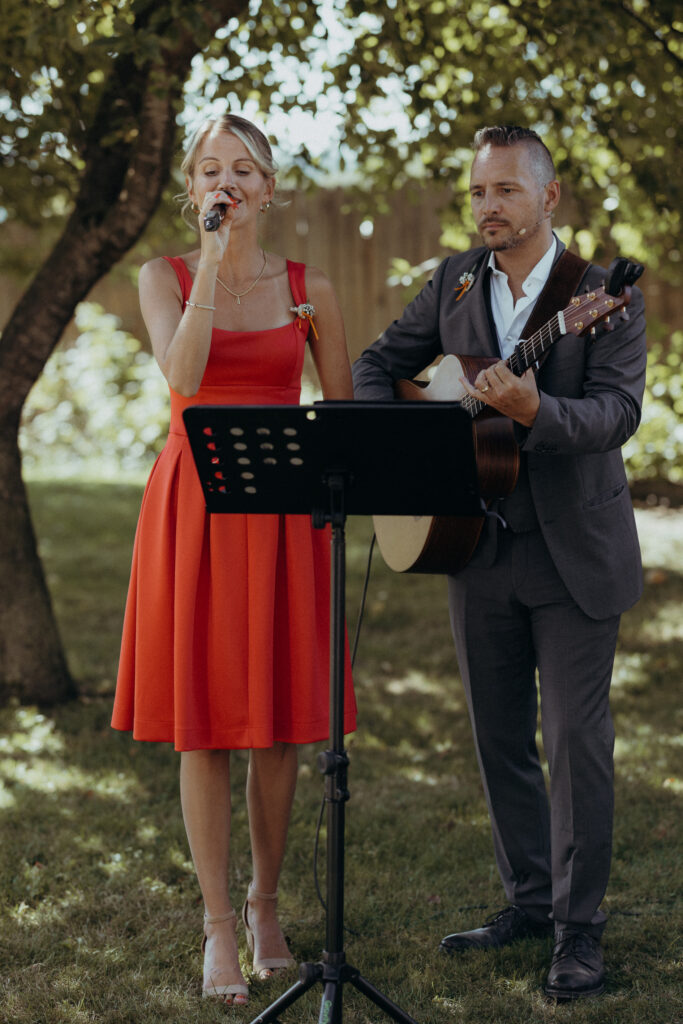
The most common mistakes with humanist ceremonies with live music
The most common mistake – planning celebrants and musicians separately
One of the biggest mistakes we see time and time again at a civil ceremony with live music is the separate planning of speech and music. The couple books a celebrant, books a musician, and both do their own thing. Perhaps they have one brief exchange, clarify the arrangements, and that's it. The result is two programmes running in parallel that don't really fit together.
To the guests, it appears as a sequence of individual sections, when speech and music are strictly separated. No coherent sequence emerges, but rather an alternation between speaking and playing. with no discernible connection. This makes the wedding ceremony feel more like a programme than a continuous flow.
Speech and music should therefore not be planned in isolation. Both interlock and fulfil different functions in the process, which must be coordinated with each other.
Creating transitions instead of causing breaks
The impact of a ceremony depends less on individual moments and more on how smoothly the transitions are designed. A harsh change from speech to music interrupts the flow. The guests' attention shifts, and the song starts without the necessary preparation, diminishing its impact.
If transitions are deliberately designed, the mood is maintained. The music can already placed quietly under the last words, so that it starts gently. Or the speaker can introduce the song thematically, explain its significance to you, so that the guests are prepared when the music begins. These transitions ensure that the proceedings appear cohesive and the song doesn't start in isolation.
Why one-off agreements are not enough
A brief preliminary discussion isn't enough for real collaboration. Often, it goes like this: you meet once, discuss the plan, clarify song requests, and then everyone works on their own.
Especially for larger weddings or more complex arrangements, it can be useful to also use a Wedding planner to work, who takes responsibility for coordinating everyone involved and keeping an overview
Really good ceremonies happen when speakers and musicians to remain in continuous exchange, collaborate on the speech, incorporate music strategically, and repeatedly review the overall flow.
How speech and music work together meaningfully
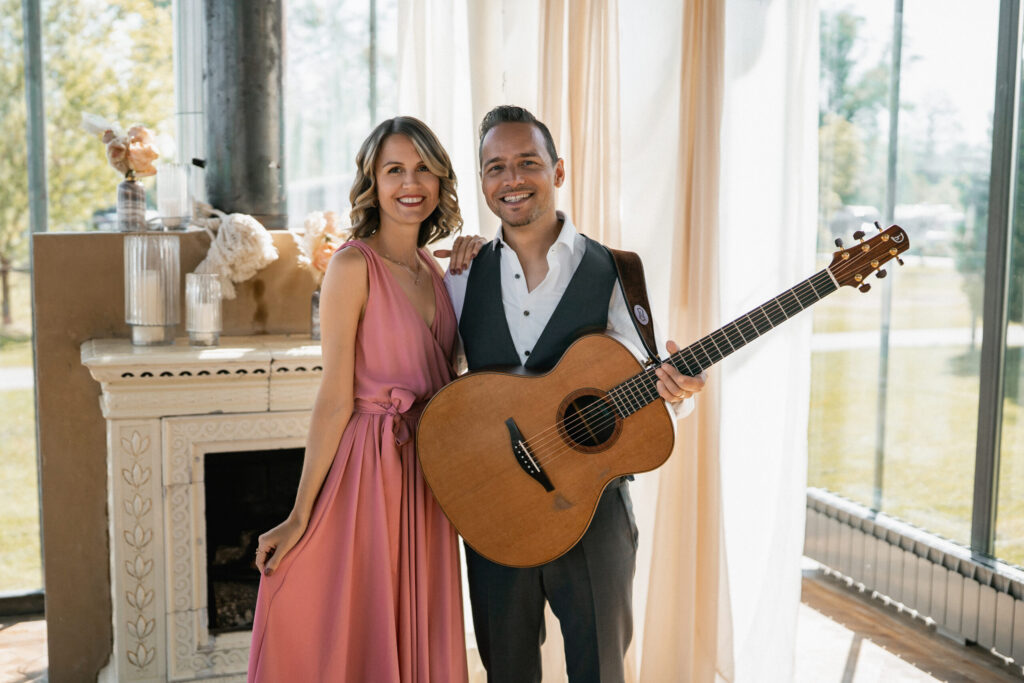
We experience this voting daily from two perspectives, as a speaker and as a musician, And it is precisely from this that the view of the wedding ceremony arises as a shared process and not as two separate performances.
Retrench rather than impress – the right attitude
We know it from concerts: the musicians are in the spotlight, show their full skill, the audience applauds. At a celebrant-led wedding, it's the exact opposite. A good wedding musician knows that they are not the main act. Their job is to, to make the bridal couple appear taller, not themselves.
A humanist ceremony is about, to create a framework for genuine feelings. Live music should support this framework, not dominate it.
Adapt songs to the moment, don't just play them
A song is not just a song. This sounds obvious, but it makes all the difference. An experienced musician doesn't simply play the original version, but Adjusts tempo, dynamics, and intensity to the respective moment. A faster song can be interpreted much more calmly and deliberately for the entrance, while a quiet ballad can suddenly gain energy and lightness for the exit.
This flexibility doesn't arise spontaneously. For this, the musician must understand the entire ceremony. He needs to know what happened before and after his shift, and what the general mood is. Wedding music works best when she completely dedicates herself to the moment.
The timing – when music starts and when it ends
The exact moment a song begins or ends is often underestimated. If the music starts too early, it feels forced. If it starts too late, the moment has already passed. A good musician senses precisely when the right time is.
Song selection – what really suits you instead of what's trending
The selection of songs should not be based on what everyone is playing at the moment or what sounds good in a playlist. It's about, What suits you as a couple. Perhaps it's a song that reminds you of your first meeting, or one that tells your shared story. The language doesn't matter. What's crucial is the emotional connection.
A good musician will help you find the right songs. They will ask questions, listen, and make suggestions that suit your story. They will incorporate your song requests into the schedule and explain where they can be meaningfully used. This consultation is part of their job and a sign that they take your wedding seriously.
We clarify exactly these points in a Free, no-obligation consultation with you. There we'll go through your wishes and show you how the music can be meaningfully integrated into your schedule.
On-site technology, volume, and flexibility
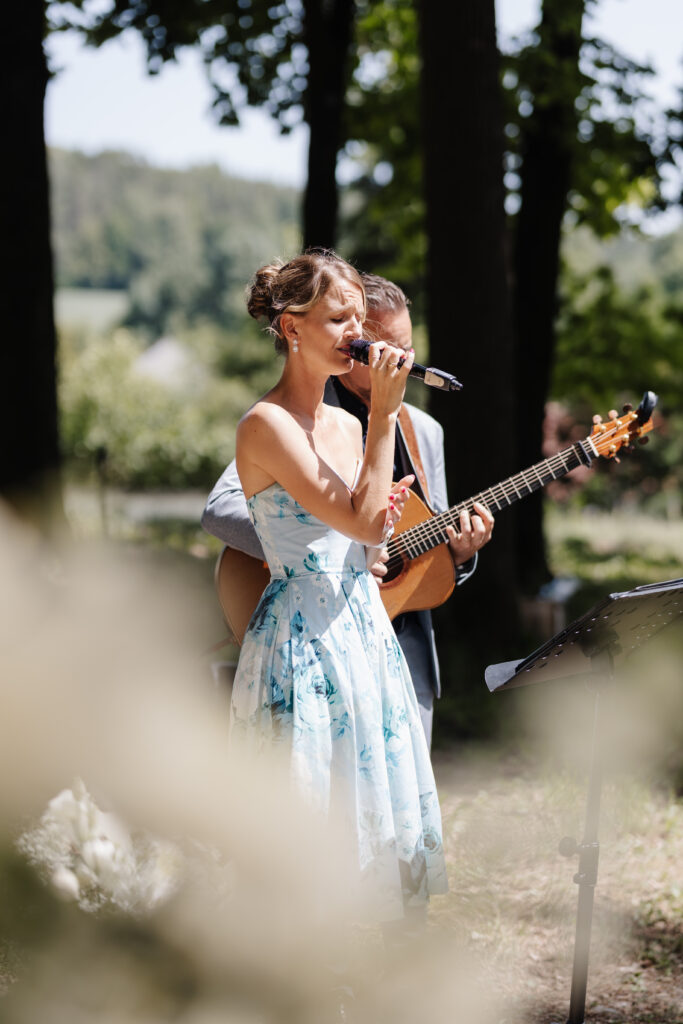
For a humanist wedding with live music, the Technology that forms the basis for everything to function reliably. A good setup ensures the sound is right and nothing fails. An experienced musician not only brings their instrument but also the assurance that everything will work. This also means, to be able to react flexibly to different locations, whether it's outdoors in the garden, in a barn or in a hall.
The volume is often underestimated. Music should envelop the guests, not overwhelm them. A celebrant-led ceremony is about Intimacy, not for sound reinforcement. A good musician has a feel for how loud or quiet a moment needs to be. This feeling is particularly important during transitions into more relaxed parts, for example, when guests come together after the ceremony.
What you should look out for when choosing and collaborating
Taking your gut feeling seriously
Of course, a musician should master their craft. But at least as important is that you feel comfortable with him. If the first conversation feels good, if you notice that he understands you and takes your wishes seriously, then that's a good sign. You shouldn't ignore this gut feeling. A wedding will only be authentic if All parties to get along humanly.
Estimating the budget realistically – where saving is the wrong decision
The wedding ceremony is the central moment of your wedding. Everything that follows builds emotionally on this. Anyone who cuts corners here weakens the overall impact of the day. Professional live music has its price, but this price is an investment in the most important moment of your lives. Years later, you won't remember the buffet or the decorations. But rather the feelings during your wedding ceremony. And it is precisely these that are carried significantly by the music.
Frequently asked questions about humanistic wedding ceremonies with live music
Do we really need live music, or would a playlist suffice?
A playlist can work, sure. But it remains static. If the bride walks in more slowly than planned or a particularly emotional moment takes longer, nobody can react. Live music adapts, caters to you and your guests. The difference is not only audible but palpable. Anyone who has experienced a celebrant-led ceremony with a good musician immediately understands that is simply not the same as music from a tape.
How many songs should we plan for the wedding ceremony?
It depends on how you structure your ceremony. In most cases, you'll need three to five songs: one for the entrance, one or two during the ceremony, and one for the exit. Sometimes it also makes sense to have quiet background music during certain speeches. The important thing is that every song has a clear function and doesn't just fill gaps. Less is often more, as long as every song really fits and is deliberately placed.
Does the musician have to know all our requested songs?
Not necessarily. A good musician can also provide you with Suggest alternatives, which better suit the mood or the cast. Some songs simply don't work well acoustically or lose their impact without the original production.
Speak openly about your wishes, but also be prepared to listen if the musician has a different idea. Often the most beautiful moments arise precisely when you engage with Submissions you hadn't considered before.
How does the voting between the speaker and the musician work in practice?
Ideally, both parties already know each other and have worked together often. Then the coordination almost runs itself. If not, event speakers and musicians should meet in person or via video at least once to go through the schedule. This isn't just about timing, but also about how the speech and music are coordinated with each other.
If they both really want to work together, you can tell by how they talk about your wedding. If it's just about processes and technique, something's missing.
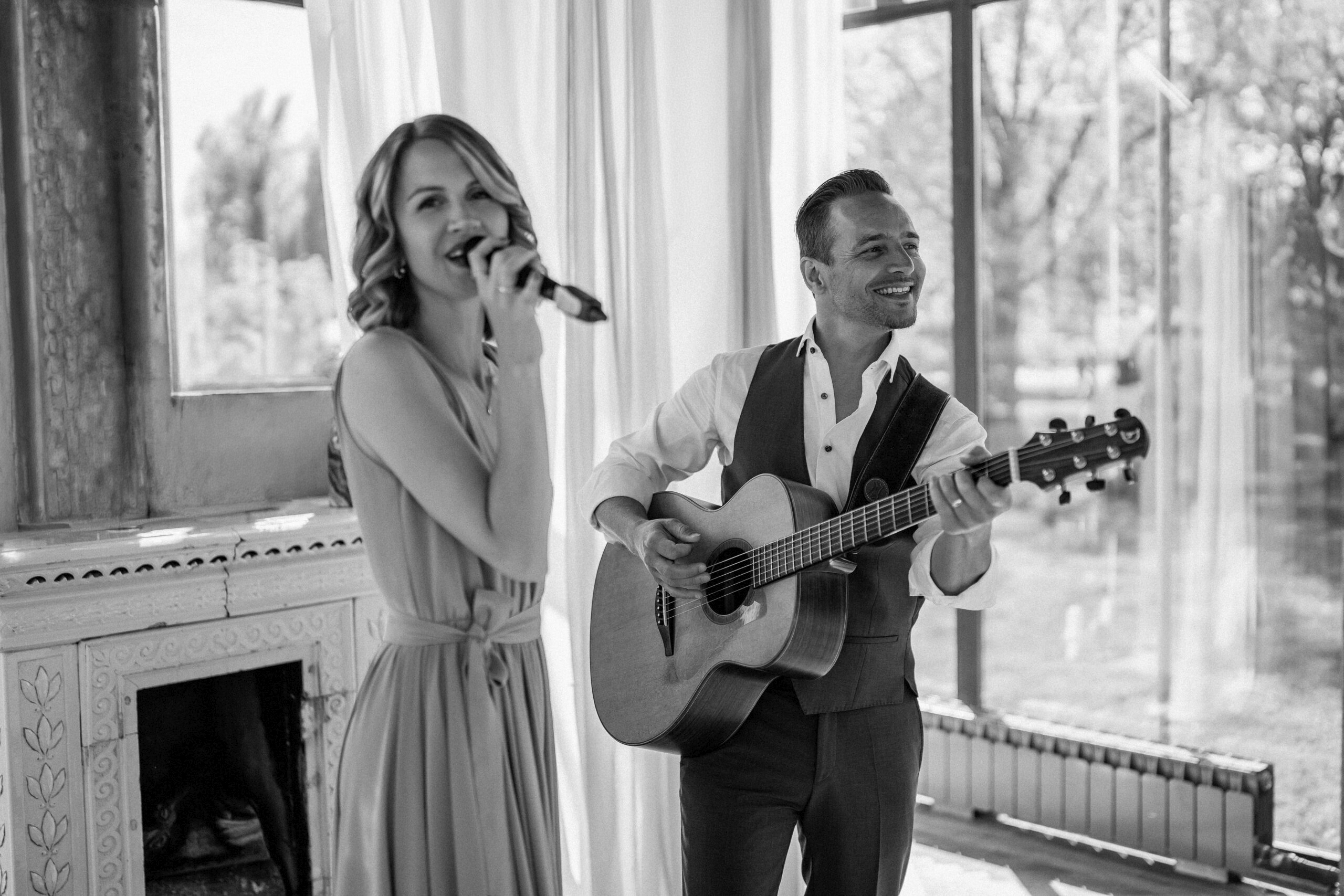
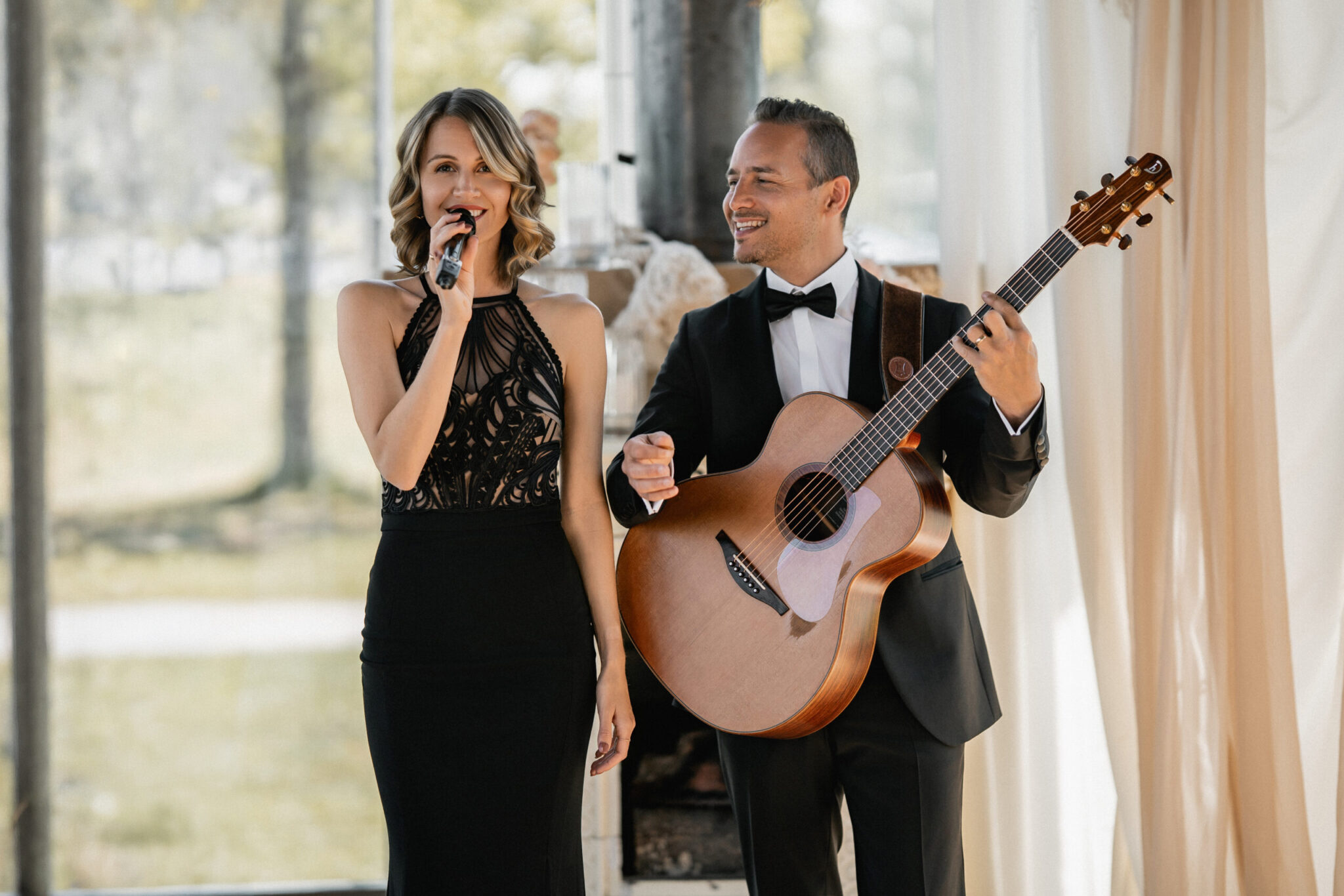
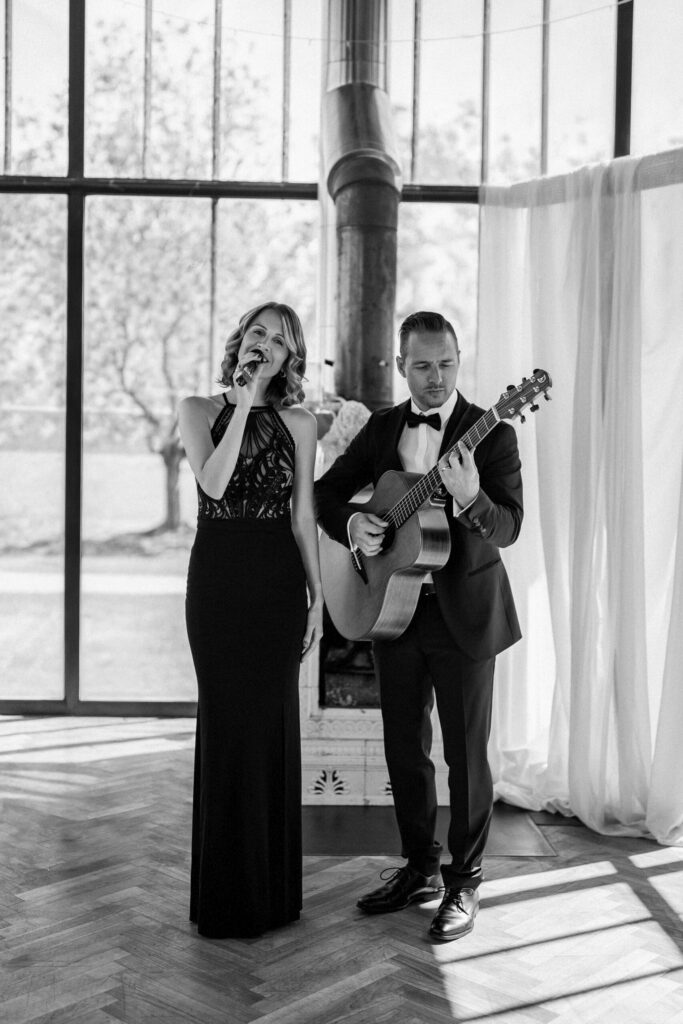
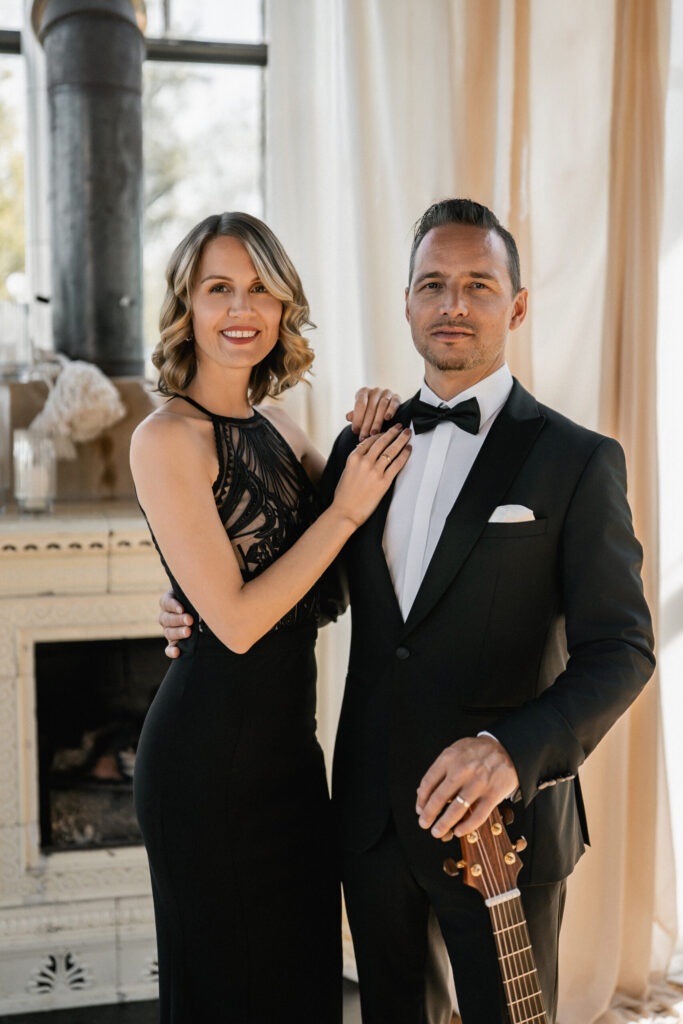
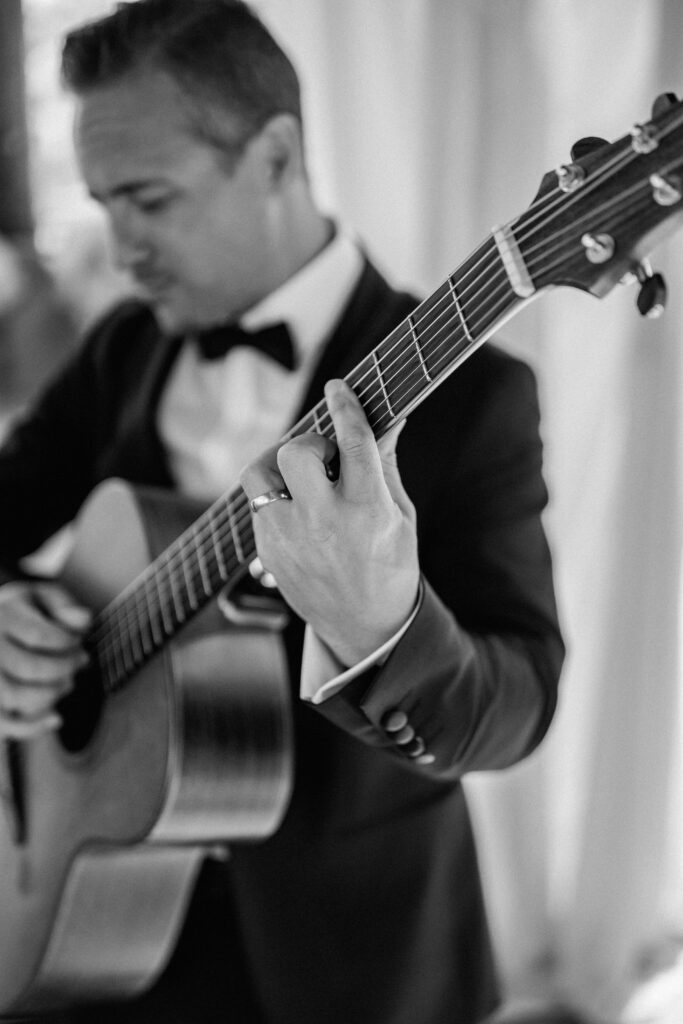
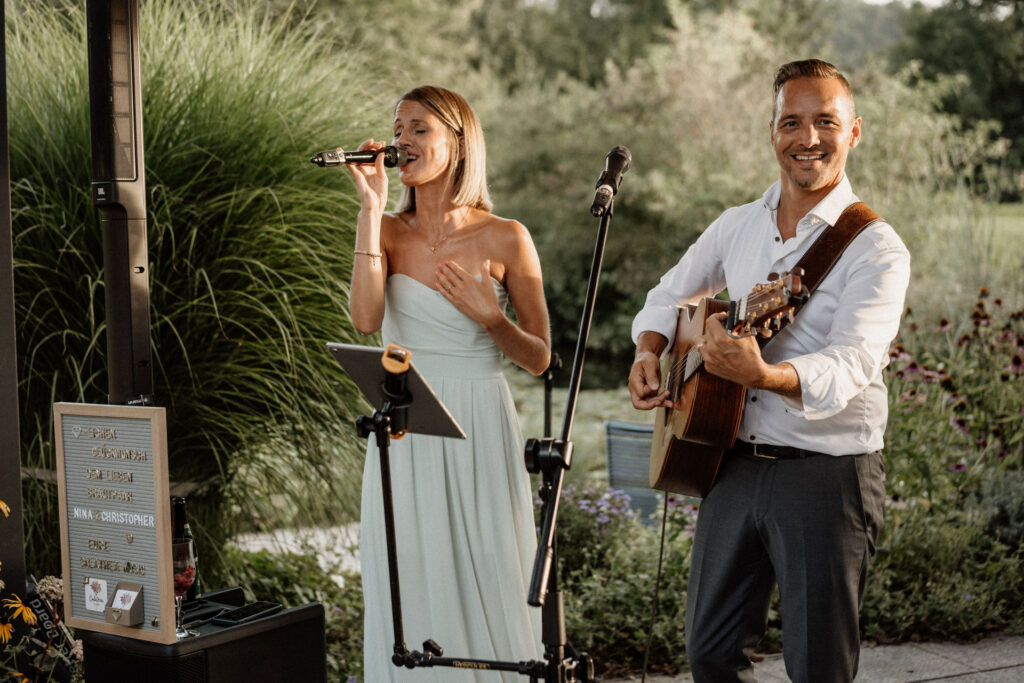
In our case, this alignment doesn't arise in conversation, but rather from the outset, collaboratively. As a speaker and musician in a permanent team, we develop speech and music in parallel. and can react to each other much more closely than is usual with separate service providers.
Roughly how much does professional live music for humanist weddings cost?
The price range is wide and depends on many factors: experience, line-up, travel and effort. Roughly speaking, professional live music for a humanist wedding usually costs between 700 and 2000 Euros. It's important not to decide based on price alone.
Ein erfahrener Musiker bringt nicht nur Können mit, sondern auch eine gute Portion Erfahrung. Safety and flexibility. Anyone who tries to save money on the wrong things here will realise it at the latest on their wedding day.
Conclusion: Free wedding with live music – why the investment is worthwhile
Your A humanist wedding ceremony with live music is the central moment of your wedding day. Everything that happens afterwards builds on this. And it is precisely here that it is decided whether this moment feels coherent or like a sequence of individual programme points.
Live music plays a clear role in this. It connects the individual parts of the ceremony, picks up on content from the speech, and ensures that transitions work. When used correctly, there is no abrupt change between speech and music, but rather a continuous flow.
The difference lies less in whether music is present, but rather how it is integrated. Playback or uncoordinated processes quickly lead to music running in the background, rather than being part of the ceremony.. Only through coordination, timing, and clear joint planning does a coherent result emerge.
This is precisely why selecting the right service providers is crucial.. It's not just about individual performances, but about how well the speakers and musicians work together and whether they understand your wedding ceremony as a complete concept. When both elements work in harmony, it creates a ceremony that feels calm, clear, and cohesive.
Whoever saves money here or approaches the planning separately might not notice it immediately, but it becomes apparent during the process. Conversely, good preparation and coordinated implementation create a moment that feels naturally right for you and your guests.
Investing in professional live music and a coordinated ceremony therefore pays off not only on the wedding day itself, but in the memory of how that moment felt.
For us, this precise coordination arises not solely in the planning stages, but directly within our collaboration. As a duo of speaker and musician, we develop every wedding ceremony together, ensuring that the speech and music do not stand apart, but rather interweave.